
It’s Your Face. It’s Not Always Your Photo.
What Really Happens to Your Image at Fashion Week?
This article is for educational purposes only and does not constitute legal advice.
Fashion Week has become a content factory. Cameras line the sidewalks before the shows even begin. Street style photographers hover outside venues. Step-and-repeat walls flash under relentless strobes. Hotel lobbies, after-parties, brand activations, and pop-ups all blur into one long reel of documentation. If you showed up to New York Fashion Week looking intentional — styled, polished, glowing and you were likely photographed. Maybe once. Maybe twenty times. Maybe by someone with a press badge and maybe by someone who looked like a freelancer with a good lens and ambition. It feels flattering. It feels normal. It feels like participation.
What many women don’t realize is this:
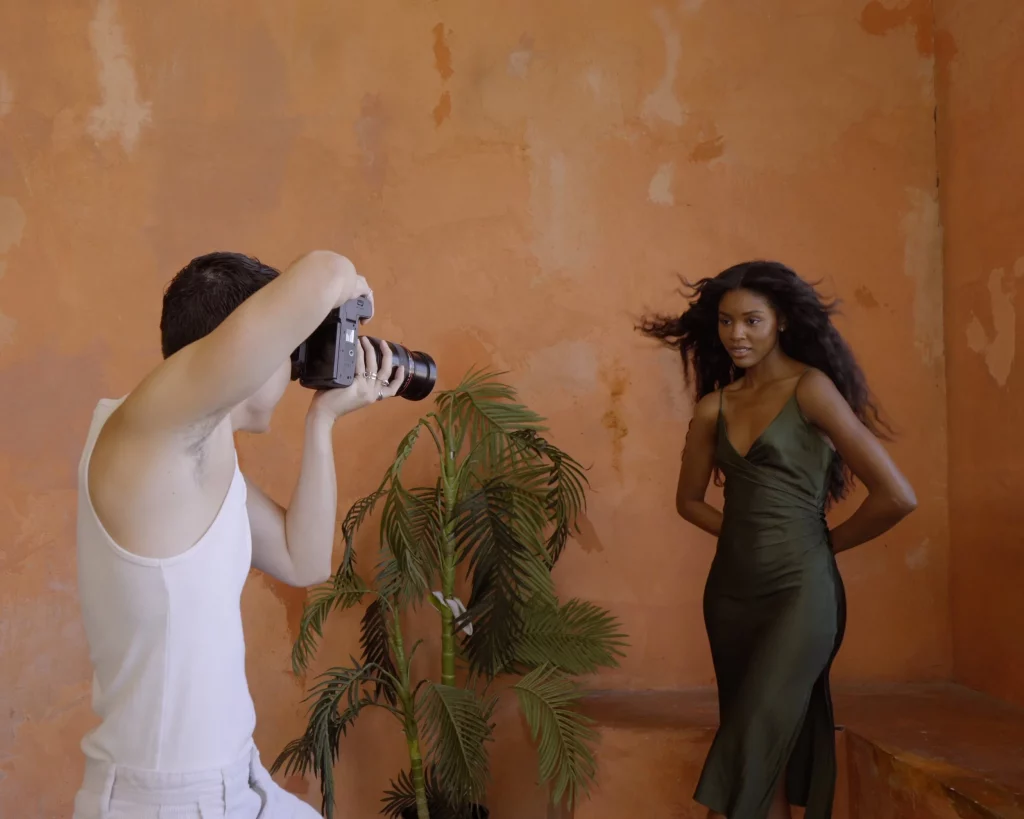
You can be photographed. You can be the subject. You can be the reason the image is compelling.
And you can still legally get into trouble for reposting that image of yourself!
That is the disconnect.

Who Owns the Picture vs. Who Is in the Picture?
Let’s separate two ideas that get blurred constantly during Fashion Week.
There is copyright ownership.
And there is your likeness.
They are not the same.
In most cases, the photographer — not the person in the photo — owns the copyright to the image. That means they control how it is reproduced, distributed, sold, and licensed. If they work for an agency, that agency often holds or administers those rights. Your face, body, outfit, and presence are the subject. But the photograph itself is considered an original creative work created by the photographer. Under U.S. copyright law, that photographer automatically owns the image the moment it is taken, unless there is a contract stating otherwise. Being the subject does not give you automatic ownership of the photograph. This is where the emotional logic and the legal logic part ways.
Emotionally, it feels like:
“It’s my body. My styling. My moment. My face.”
Legally, it’s:
“The photographer captured and owns the image.”
That distinction matters more than most people realize.

Getty Images and the Image Economy
Once a photograph is uploaded into a major agency ecosystem like Getty Images, it stops being a casual snapshot. It becomes an asset. Agencies such as Getty Images operate as licensing platforms. Photographers upload their work. Agencies catalog, tag, and distribute those images. Media outlets, brands, publishers, and marketers then pay licensing fees to use them. When you see a Fashion Week photo on Getty, you are not looking at “a cute picture.” You are looking at a rights-controlled commercial asset.
If you click on an image and see language like “license for personal use,” that does not mean you are buying ownership. You are purchasing permission — often limited, specific, and conditional to use that image in a defined way. Once your photo enters that ecosystem, it becomes part of a commercial pipeline. Editors can license it, brands can license it, and advertisers can license it.And yes…you might have to license it too. That can feel surreal. But from the agency’s professional perspective, it’s consistent. They are not licensing your face. They are licensing the photograph.

When Celebrities Learn the Hard Way
This dynamic is not theoretical, we’ve seen it play out in our lifetime. In one well-known situation involving Nicki Minaj, Bloomberg Law reports, she was sued by a Splash News and Picture Agency, after reposting paparazzi images of herself on social media without securing a license. She was not alone. Other public figures have faced similar lawsuits over the years like Lebron James, Gigi Hadid, Jennifer Lopez and more.
The common thread is this:
The celebrity was the subject.
The agency owned the photo.
When Minaj reposted the image without permission, the agency treated it as unauthorized use of copyrighted material. It does no matter that the image was of them. The law focused on who owned the copyright. Now scale that down. You may not be Nicki Minaj. You may not have millions of followers. But the legal structure is the same. If you repost an agency-owned image to promote yourself, a brand deal, or a partnership without permission, you could theoretically be accused of infringement. Most cases do not escalate dramatically, especially since more traffic is evidence of demand for the creator. But some do, and the stress alone is enough to make you wish you had known sooner.

What You’re Likely Agreeing To Without Realizing?
Fashion Week is not just a fashion environment. It is a media environment.
When you RSVP to an event, enter a branded activation, or walk into a venue with visible cameras and posted signage, you are often entering under terms that include photo and video consent.
That consent might be buried in:
- RSVP confirmations
- Ticket fine print
- Venue signage
- Event terms and conditions
Sometimes it is as simple as language that says attendance implies consent to be photographed for promotional purposes. That does not mean you signed away every right forever. It does mean you are participating in a content ecosystem you do not fully control. Street style photography adds another layer. Public spaces generally allow photography. If you are outside a show, dressed beautifully, and posing naturally, there is often no contract between you and the photographer at all. Which means you likely did not negotiate rights and by law the photographer retained them by default.

The Subtle Risk of Reposting
The risk is rarely in sharing a tagged post from a friend.
The risk tends to appear when:
- You repost a professionally shot image with an agency watermark removed.
- You crop out branding from a licensed platform.
- You use the image to promote a brand collaboration or monetize your presence.
- You assume “everyone does it” so it must be fine.
Fashion Week images circulate fast, but speed does not equal permission! If an image lives on a licensing platform, it exists within a monetized system. Nicki Minaj’s case was centered on pictures from 2017 – 2018, went to suite in 2020, and settled for $65,000 in 2021. Reposting it without authorization, especially in a commercial context can trigger legal attention. That does not mean panic; it means pause and understand the legal layers and monetization benefits behind your craft.
Practical, Protective Habits for Guests and Talent
This is not about fear, it is about awareness.
Here are grounded habits that protect you without overcomplicating your life:
- Do not assume every professional-looking photo of you is free to repost.
- If you see your image on a licensing platform, avoid downloading and reposting it directly.
- Never remove watermarks from agency or branded images.
- When an event or brand sends you images, reply and ask clearly: “Do I have permission to post these on my personal and promotional channels?”
- If you are a model or booked talent, ask your agent or client: “Am I cleared to share images from this event?”
That question is not aggressive. It is professional.
If you are building a brand, remember: your image is an asset. Treat it like one.
The Emotional Layer We Don’t Talk About
For many women, especially Black and Brown women this system can feel extractive. Your style sets the tone. Your presence drives attention. Your aesthetic circulates widely. Yet the infrastructure behind the image often belongs to someone else. There is a long history of women’s labor, creativity, and cultural influence being monetized without proportional control. Fashion Week does not exist outside that context. This article is not here to shame anyone for not knowing the mechanics. Most people are never taught them. It is here to give language to something that often feels confusing or unfair. You are not naive for assuming a photo of you is yours. The system is simply more layered than it appears.
Moving Like Someone Who Understands the Structure
You can still enjoy being photographed. You can still love your street style moment. You can still celebrate the image of yourself stepping into your power. But you should understand that behind every high-resolution photo is a legal and economic framework.
When you show up to Fashion Week:
- Know that cameras are part of the business model.
- Recognize that some images enter licensing systems.
- Think twice before reposting or monetizing a photo you did not create or commission.
Read the fine print at least once! Ask a clarifying question when necessary. Respect your image as both expression and asset. In this industry and today’s digital economy, visibility is currency. And currency always has a structure behind it protected by the creator’s legal rights. At Finessed, we believe women deserve not only access to beautiful spaces, but literacy in how those spaces function. Fashion is art, it is culture, and it is business. Ironically, your image sits at the intersection of all three. The next time you’re photographed under the lights of Fashion Week, smile. Pose. Enjoy it, but also know what’s happening behind the lens.
✨ Stay Connected with Finessed for more Fashion Week and Business News!
📸 Follow us on Instagram @finessednyc
🎥 Follow us on TikTok @finessednyc
👍 Follow us on Facebook FinessedNYC